WARNING: This is a dangerous process. It creates toxic gasses that can hurt you. If you try this based off of this article we are not responsible for any of the negative consequences: any type of injury resulting from trying this is not our responsibility. If you try to seal the lid and the pot explodes or any other catastrophic failure is not our responsibility.
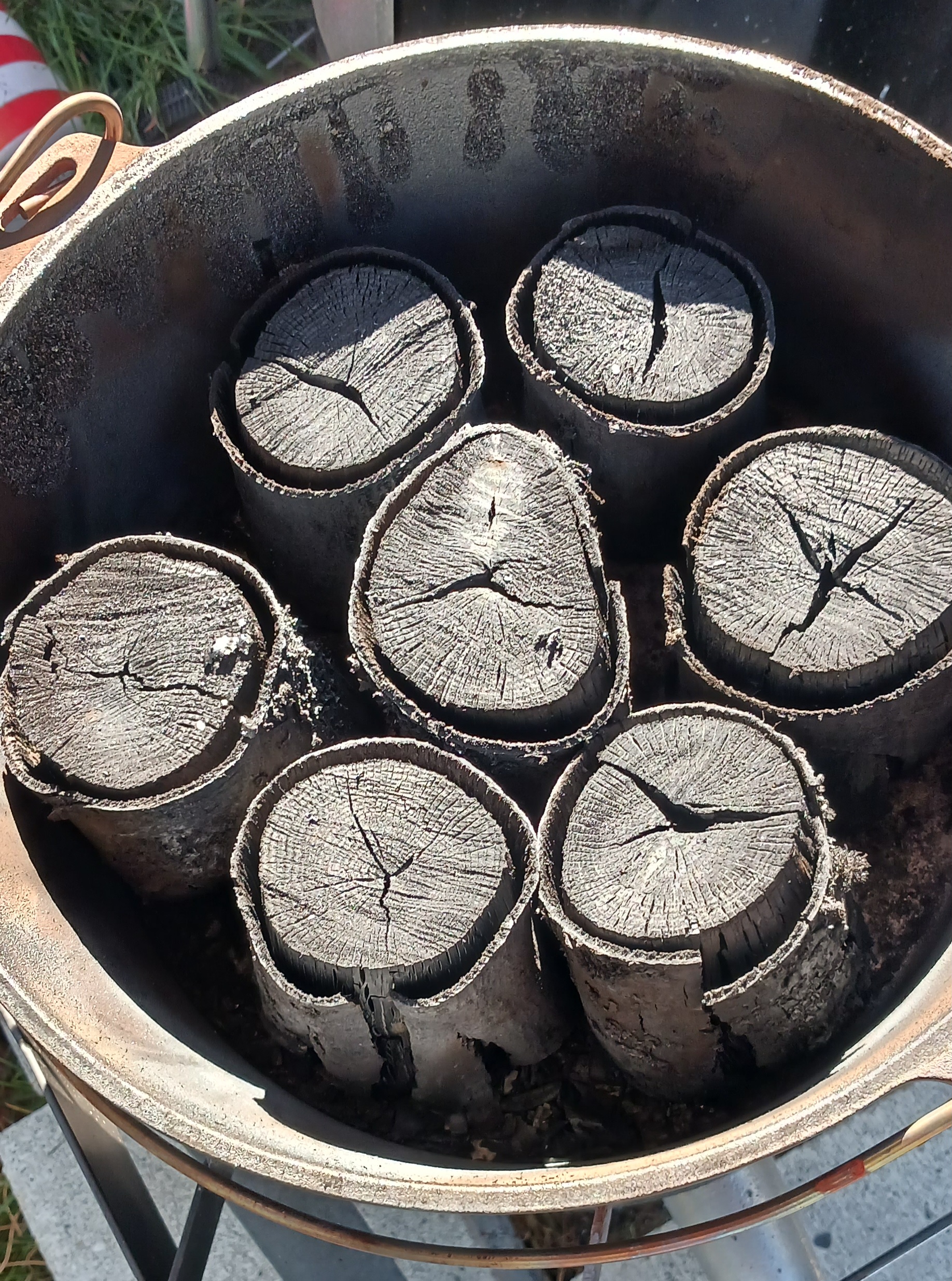
That being said the end results were basically a lump charcoal. It was very light, had little mass. The resulting charcoal is very porous and soaks up lighter fluid readily. I used very little lighter fluid on the charcoal to get it lit. The charcoal lit fast and was very hot. Great for searing steaks and chicken. I used the offset grilling method also known as two zones. Used an old stainless steel colander to stack the charcoal to one side of the grill. Then grilled the chicken over the coals initially to get some color on it. Then moved the chicken to the side and let the meat roast about 30 minutes, not above the coals. The chicken turned out just as good. There was no smoke flavor from the woods I used to make the charcoal: Apple, Alder and Plum.
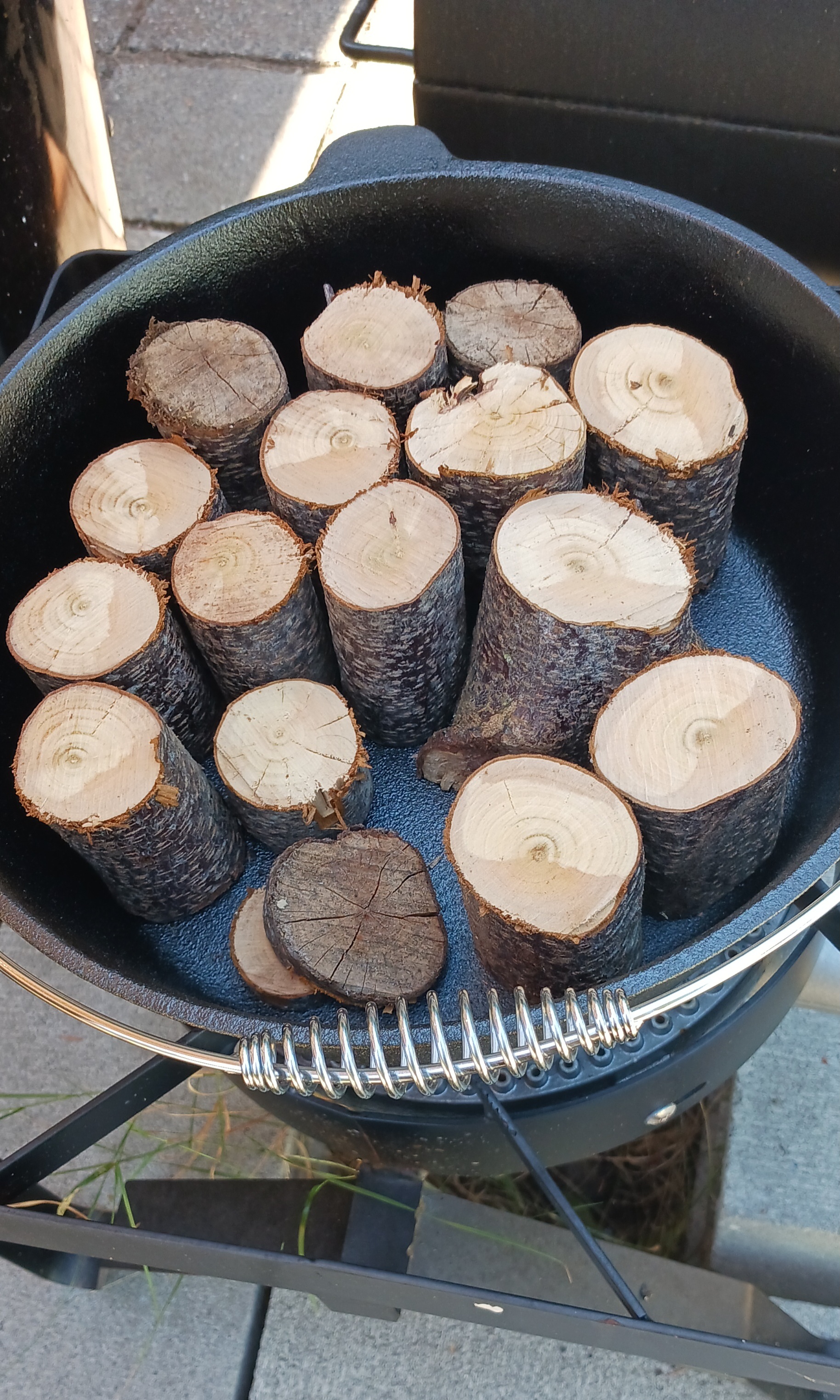
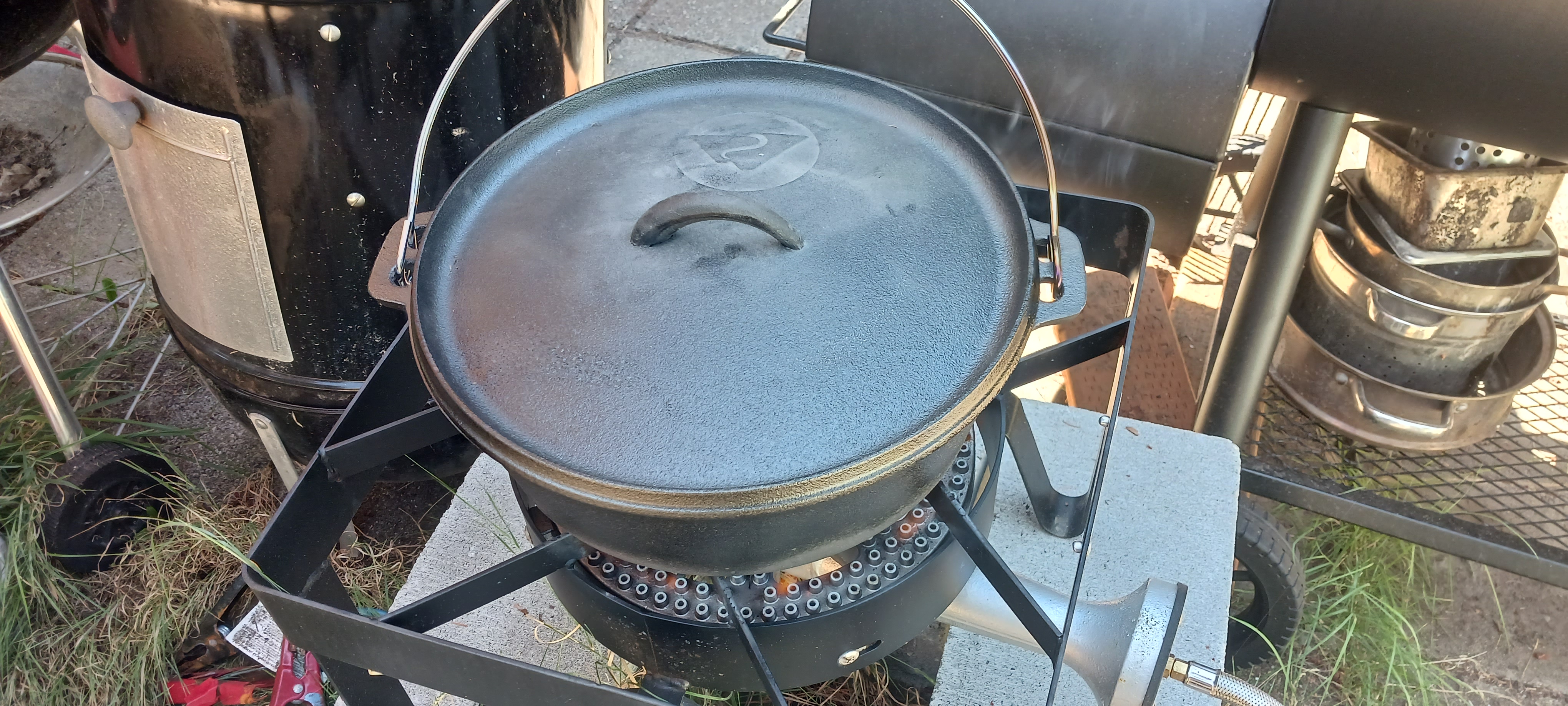
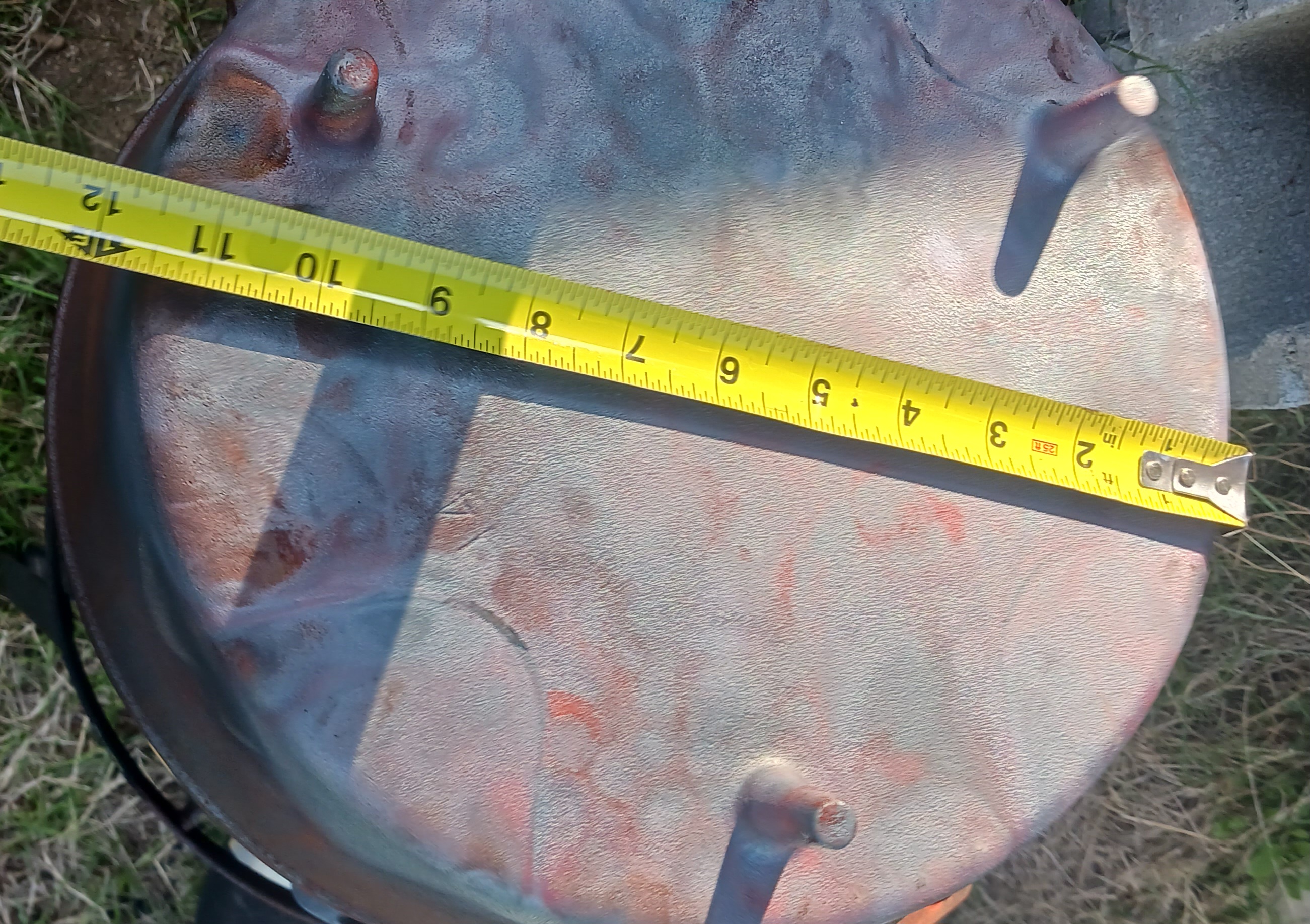
The process of making charcoal starts with a few components. A cast iron Dutch Oven (I started with 5 qt then upgraded to 12 qt), a gas burner similar to a turkey frier setup and some hard wood (I used Plum, Apple and Alder). I've heard any hardwood species would work: Oak, Maple, Hickory etc...
A little science for the explaining the process.
Pyrolysis — that's the general term for chemically decomposing organic material (like wood) using heat while oxygen is limited or absent, which is exactly what you've been doing this whole time.
A couple of related terms depending on precision:
- **Pyrolysis** — technically means decomposition by heat *without* combustion at all (zero oxygen, purely thermal breakdown). This is the "ideal" process — wood breaks down into charcoal, gases, and tars purely from heat.
- **Carbonization** — often used interchangeably with pyrolysis specifically when the end goal is producing carbon-rich char (i.e., making charcoal).
- **Partial/limited combustion** or **incomplete combustion** — more accurate for what's actually happening in your setup, since you're not achieving zero oxygen (it's not airtight) — there's just *not enough* oxygen for full combustion, so some burning does happen (which is why you get the flame at the vent, heat generation, etc.), but wood also thermally decomposes rather than fully combusting to ash.
In practice, real-world charcoal-making (yours included) is a mix — you get true pyrolysis happening internally where oxygen genuinely can't reach, plus limited combustion at the surface/edges where a little oxygen does get in, which is also what's providing enough heat to sustain the process without external fuel once it gets going. "Pyrolysis" is the term you want in casual use — it's the umbrella term everyone in charcoal/biochar production uses for this whole process. Wood gas is the mix of combustible gases that release from wood when it's heated without enough oxygen to fully burn — exactly what you've been watching flare off your pot vent this whole time.
**What's actually happening chemically:**.
When wood heats up in a low-oxygen environment, it doesn't burn cleanly to ash. Instead, heat breaks the wood's cellulose, hemicellulose, and lignin apart into smaller molecules — a process called pyrolysis, the term you asked about earlier. Those broken-apart molecules escape as gas, mainly:.
- **Carbon monoxide (CO)** — the biggest combustible component, colorless, odorless, genuinely dangerous to breathe.
- **Hydrogen (H2)** — highly flammable, burns almost invisibly.
- **Methane (CH4)** and other light hydrocarbons — flammable, contribute to visible flame color.
- **Water vapor** — not combustible, this is a big part of that early thick white smoke.
- **Tars and creosote vapors** — heavier compounds, partly combustible, mostly what makes the smoke look dirty/dark and what gums up surfaces.
**Why it burns when you touch a flame to it:**.
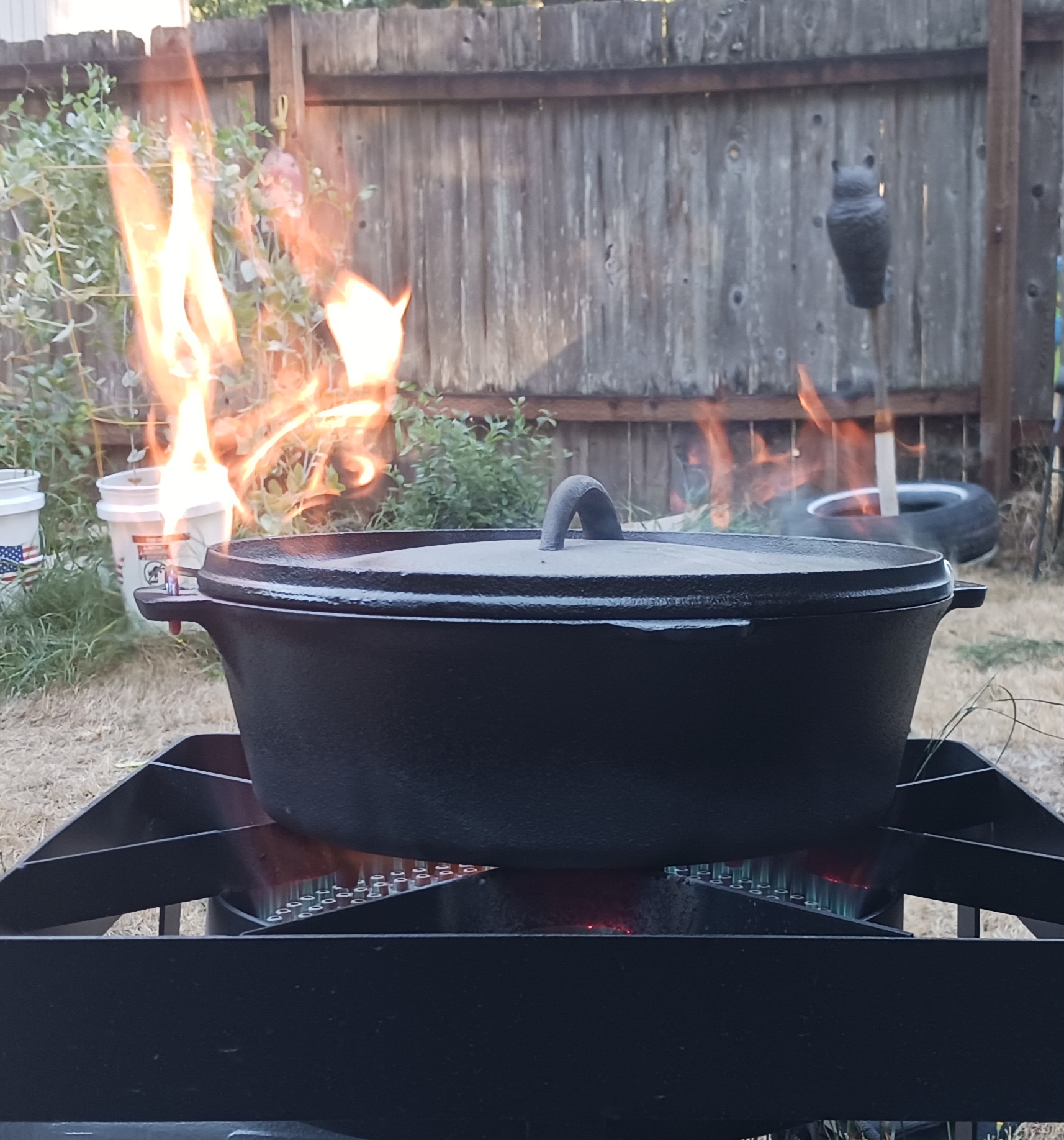
Those gas components (CO, H2, CH4) are fuel — they just need an ignition source and enough oxygen (which they get the moment they exit the vent into open air). That's why your torch caught it instantly at the lid gap: the fuel was already there, just waiting for oxygen and a spark, which it couldn't get while still sealed inside the pot with the wood.
**Why the flame fades out as the batch finishes:**
Early in the burn, wood is releasing volatiles fast — moisture first, then increasing hydrocarbon/CO content, which is why smoke gets thicker then turns bluish. As the wood fully converts to carbon (charcoal), there's simply less material left to break down and release as gas. Less gas production means the flame you can sustain at the vent gets smaller and eventually can't sustain at all — which is exactly the "flame won't catch" signal you used to call the plum batch done.
**Historical footnote, since you mentioned wood gasifiers earlier:** this same gas, captured and cleaned rather than flared off, is literally what powered vehicles and generators during fuel shortages (WWII-era wood gasifier cars) — same chemistry, just harvested instead of burned at the source like you're doing.
You can see clearly with the images attached the results. Raw wood chunks converted to charcoal. The wood gas ignites on the side of the Dutch Oven lid. When the flame gets really low, usually gone I shut the gas burner off. Never open the lid. Let the lid sit till the cast iron cools down, about 2 hours. Carefully open the lid to see results. If the coals are smoldering still it will likely flash when air is exposed to the charcoal. The resulting charcoal worked perfect.